
- +1-888-336-6644
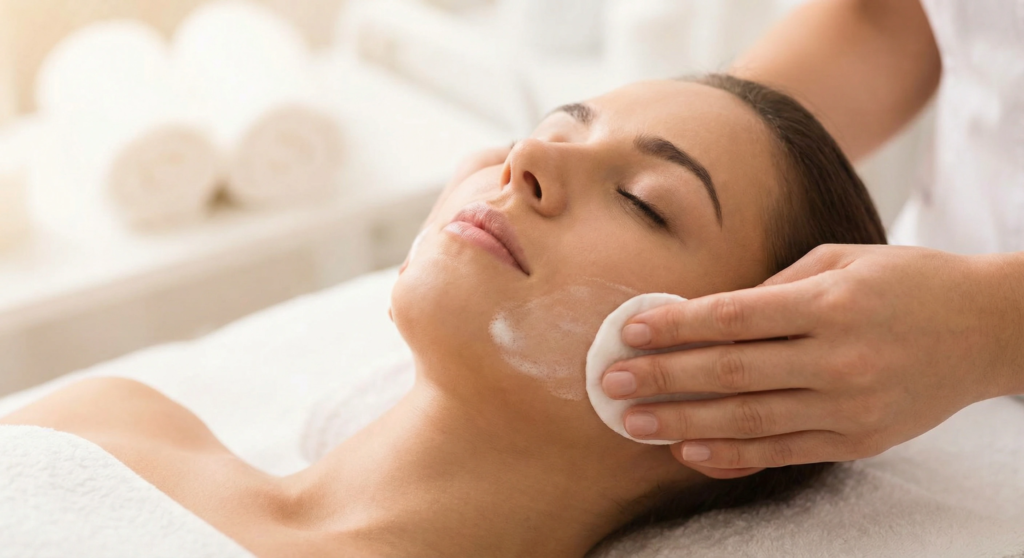
Summer arrives in Southeast Texas, and issues of skincare grow at a rate quicker than the heat. Lake days in The Woodlands, outdoor events in Cypress, pool parties in Spring, and weekend markets in Magnolia, TX make it impossible to avoid sun exposure.
And that is what the question begins trending:
Does Dermaplaning cause Sunburns?
Some individuals have the impression that since dermaplaning peels off their skin, it makes them more sensitive to the sun. It might sound logical.
However, it is not a scientific fact.
Since UV indexes are often high throughout most parts of Montgomery and Harris County during the peak of the summer season, it is necessary to learn how dermaplaning and sun exposure are related to each other. This detailed blog will clear up your misconception about whether dermaplaning makes you prone to sunburn.
Dermaplaning is a professional, non-invasive exfoliation method that involves the use of a sterile surgical blade to lift off dead skin cells (the topmost layer referred to as stratum corneum) and Vellus hair (also referred to as peach fuzz).
Dermaplaning instantly leaves the skin smoother, brighter, and less lumpy. It is usually done in medical spas and dermatology clinics around the Woodlands, Cypress, Spring, and Magnolia, TX, as a safe and no-downtime skin-refreshing procedure.
In the course of professional dermaplaning:
Since the deepest protective structures of the skin are not destroyed, as the deepest dead layer is left, only the outer layer is removed. Before, many of the clients in Spring and Cypress preferred dermaplaning for:
The treatment improves the penetration of the skin care products and the application of the makeup, particularly when it is humid in Texas in the summer.
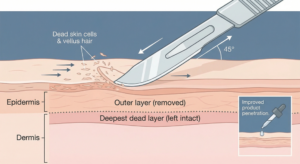
This is the core of the myth. The uppermost layer that is exfoliated in the dermaplaning process is the dead cells of keratin, which are already in the shedding stage. These cells:
Actual UV protection is provided by:
Dermaplaning does not affect these protection mechanisms.
To answer the question properly, i.e., to answer whether dermaplaning causes sunburn, we need to know what causes sunburn to begin with. Sunburn isn’t caused by smooth skin.
It is caused by UV radiation destroying living cells. And in regions that are high-UV, such as The Woodlands, Cypress, Spring, and Magnolia, TX, one needs to know this science.
Sunburn is caused when ultraviolet (UV) radiations enter the skin and damages cell DNA. This causes an inflammatory reaction resulting in:
Speaking about UV rays and skin damage, one should know about the two main types of UV rays:
| UVB Rays (Burning Rays) | UVA Rays (Aging Rays) |
|
|
Both categories lead to injury on the skin; it is the UVB that causes acute sunburn. In areas like Cypress and Spring, where UV indexes can often be very high in the summertime, exposure risk is high in either case, whether you have a facial treatment or not.
The natural protection of your skin to UV radiation is melanin. It:
Individuals whose melanin concentration is greater are more naturally protected against the UV radiation. Nevertheless, all people, irrespective of their skin color, can be affected by UV. Dermaplaning does not eliminate melanin-producing cells (melanocytes). These cells reside in deeper epidermal layers, which are not affected by the treatment.
The protective outer system, which prevents:
Although dermaplaning is effective in clearing the surface debris, it does not clear the structural elements of the barrier when it is done correctly. Nonetheless, aggressive exfoliation (particularly when used together with retinoids or chemical peels) will short-term disrupt the barrier, which may enhance irritation and perceived sensitivity.
The southeast Texas is experiencing:
Exfoliation is not the actual risk factor. It’s:
Now that we have a clearer clue as to what dermaplaning is and what makes me sunburned, the main myth should be addressed. Unless dermaplaning harms cells, why then are so many individuals convinced that it raises dermaplaning sun sensitivity?
This myth did not just come out of thin air. It is a result of three key misconceptions.
Technically, yes, but not the layers people think. Dermaplaning is the process of shedding the topmost layer of the skin cells (stratum corneum). These cells are already inanimate and shed naturally every 28-40 days.
The other aspect as to why the myth still exists is the confusion between dermaplaning and more invasive cosmetic treatments.
Treatments like:
The creation of controlled injury is intended to promote collagen production. These procedures may lead to temporary photosensitivity following facial procedures since they have a deeper penetration into the living layers.
The American Academy of Dermatology provides guidance that shows that the various types of superficial exfoliation treatment are not the same as those that target the deeper layers of the skin.
Your skin looks and feels like after a dermaplaning facial:
On the psychological level, this may give a feeling that the skin is thinner or more frail.
In the absence of dead cell accumulation:
You may notice the sun more, but that doesn’t mean your skin is burning faster. There’s a difference between heightened sensation and increased UV damage.
No, dermaplaning does not cause skin burns.
Nevertheless, the reasons why it is so cannot be ascertained without a deeper examination of the dermaplaning sun sensitivity in relation to the impact of exfoliation on the skin.
Dermaplaning only exfoliates stratum corneum, the most superficial layer that comprises dead skin cells.
These cells:
The actual protection provided to your skin by the UV is:
Dermaplaning does not deepen in these structures, so the process does not necessarily predispose you biologically to burn.
Although dermaplaning is not a cause of sunburn, people will experience slight, temporary sensitivity caused by:
It is like your skin can be more conscious of it after applying a soft exfoliating scrub, and it does not imply that it burns more on a cellular level.
Yes, dermaplaning is safe in summer, provided that one uses the right sun protection. In places such as The Woodlands, Cypress, Spring, and Magnolia, TX, where there is high exposure to UV and outdoor activity is common, wearing sunscreen is required even after a treatment has been administered.
Recommendations by the American Academy of Dermatology include:
These rules are applicable to all persons, and not only to those who undergo a facial procedure.
In case of a person who has dermaplaning and then:
They will definitely burn. However, the reason is not dermaplaning. It is unprotected UV exposure.
Dermaplaning itself does not result in sunburn, but poor care does. In areas where the UV index is high, such as The Woodlands, Cypress, Spring, and Magnolia, TX, sun protection is not just necessary, but a necessity. The full summer guide to smart dermaplaning aftercare.
Using SPF 30+ will block UVA (aging) and UVB (burning) rays as this is necessary in The Woodlands, Cypress, spring and Magnolia, TX.
Texas humidity and heat can decrease the effectiveness of the SPF. When you go outside, it is recommended to reapply sunscreen so you can always be sure you are well-protected, even at the baseball game in the Spring or walking through Magnolia.
The highest UV radiation is during the noon. It is possible that the risk of sunburn can be lowered greatly by scheduling outdoor activities in the early mornings or evenings, or staying in the shade areas, after treatment.
Hats, sunglasses, and lightweight long-sleeve covers come as barriers to the UV rays. Physical protection should accompany sunscreen to give an added safety measure, particularly when spending a long time outside in Cypress or the Woodlands.
During the 48 hours after dermaplaning, do not use retinoids, scrubs, and harsh acids. Rather, look at the hydrating serums and moisturizers that support the barrier to minimize irritation and speed up the recovery of the skin.
Feel the soft, glossy skin that one can reap only with the professional dermaplaning procedures at Enfield Royal Medspa in Tomball, TX. Our med spa is only a 10-15 minute drive away, no matter where you live, The Woodlands, Cypress, Spring, or Magnolia, and thus, to make the time in your hectic summer schedule, a rejuvenating facial is easy.
Book your dermaplaning session in Tomball, Tx today and bring yourself into the summer with better, smoother, and brighter skin.