
Hair Transplant in Dubai
Texas | Houston | New Jersey
Pre And Postcare In Houston
Hair Transplant in Dubai
- Procedures Starting at $3,500 USD
- In-Person Consultation at Our Houston Clinic
- DHA-Licensed Surgical Facility in Dubai
- 5-Star Hotel Stay Included
- Board-Certified Surgical Team
- Procedures Starting at $3,500 USD
- In-Person Consultation at Our Houston Clinic
- DHA-Licensed Surgical Facility in Dubai
- 5-Star Hotel Stay Included
- Board-Certified Surgical Team
Pre- & Post-Op Hair Transplant Care in Houston Surgery in Dubai
Enfield Royal Clinic brings world-class hair restoration to Houston through a direct partnership between our Houston clinic and our Dubai surgical facility. This isn’t a remote, hands-off referral, it’s one coordinated care journey across two locations.
Your consultation happens in person, at our Houston clinic, where you’ll sit down with our team, go through bloodwork, and build a treatment plan face-to-face. Your procedure is then performed at our Dubai facility, before you return to Houston for every step of your recovery , bloodwork, aftercare, PRP, and follow-up all handled locally, by the same team that started your journey with you.
It’s a model built on continuity: the people who plan your treatment are the same people who see it through, whether you’re across the table in Houston or on the other side of the world in Dubai. For more details read our hair transplant guide for USA patients.
How the Houston–Dubai
Program Works
In-Person Consultation (Houston)
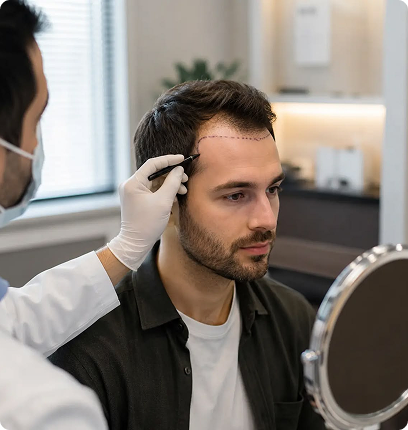
Meet your care team face-to-face at our Houston clinic. This includes a full consultation and required bloodwork not a video call.


Treatment Planning
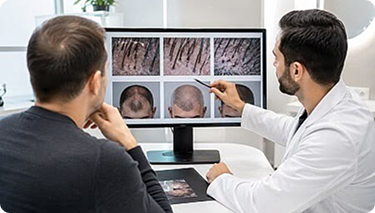
Your Houston and Dubai teams collaborate on a plan tailored to your hair loss pattern, goals, and timeline.
Procedure (Dubai)
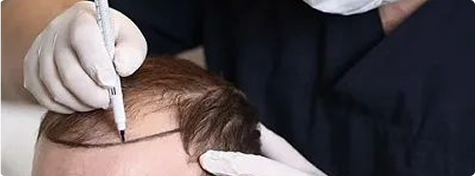
Your transplant is performed at our DHA-licensed Dubai facility by our experienced surgical team.

Recovery & Aftercare (Houston)
Back home, your Houston clinic manages 100% of your aftercare including PRP sessions and all follow-up visits.

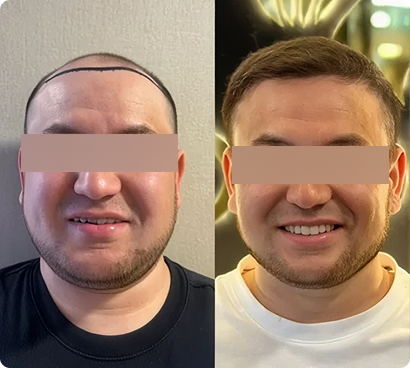
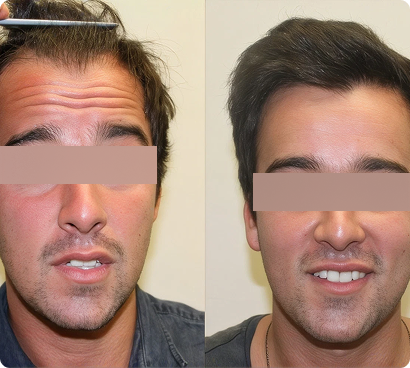
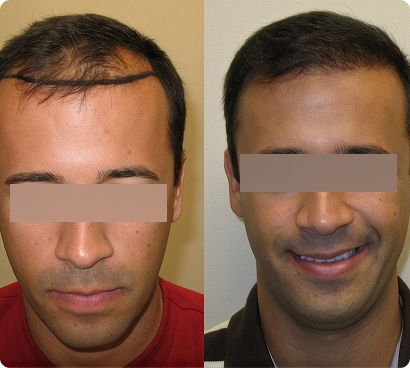
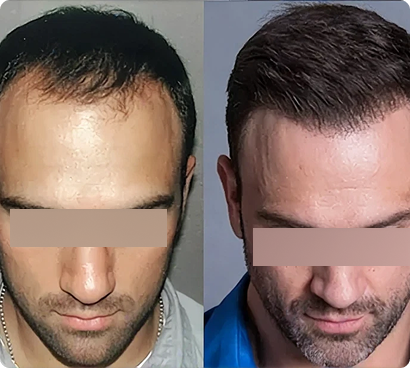
BEFORE & AFTER
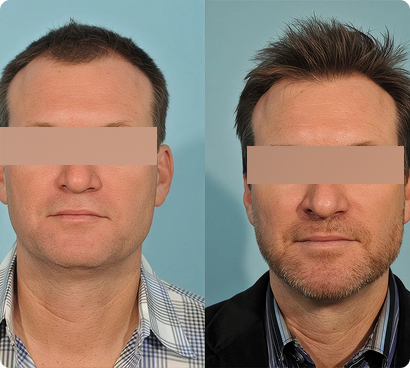
Meet Our Experts
Dr. Sannia Awais - Dubia
Dr. Sannia Awais
Dr. Leen Makhlof - Dubai
Dr. Leen Makhlof
Homaira Ahmed, MD - Houston, TX
Homaira Ahmed,MD
Rabab Arastu, DNP - Houston,TX
Rabab Arastu,DNP
Dr Mahmoud Akrama - Dubai
Dr Mahmoud Akrama
Dr. Ahmed Naji Attiyah - Dubai
Dr. Ahmed Naji Attiyah
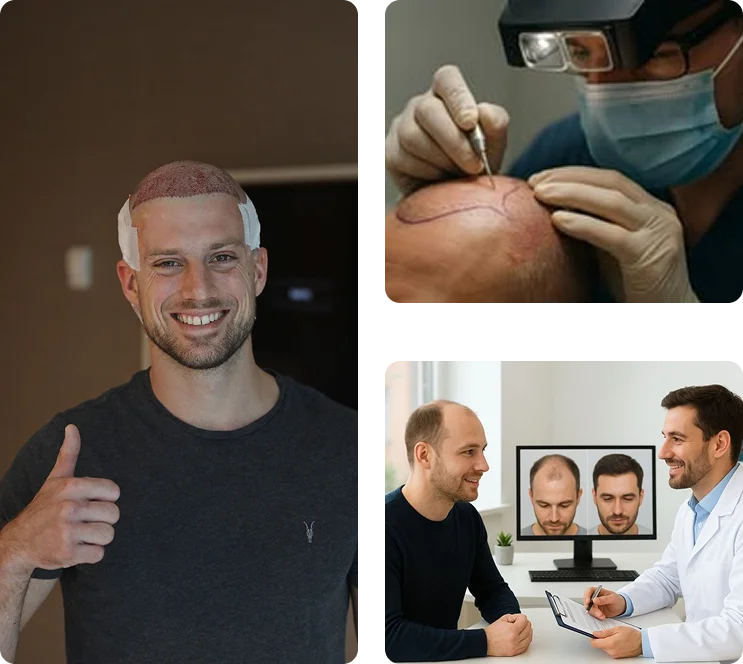
Hair Transplant Package
Every patient’s plan is different, so instead of fixed package tiers, your Houston consultation includes a full, personalized quote. As a starting point:
Procedures starting $3,500 USD.
Final pricing depends on graft count and the number of surgery days required , pricing increases with additional surgery days. Your quote, provided after your in-person Houston consultation, includes:
- In Person-consultation and bloodwork in Houston.
- Surgery at our DHA-licensed Dubai facility.
- VIP airport, hotel, and clinic transfers in Dubai.
- Multi-night stay at a 5-star partner hotel.
- Complimentary PRP sessions as part of your Houston aftercare plan.
- Full follow-up care and progress reviews at our Houston clinic.
Hair Transplant Package
| Hair Restoration Option | USA – Typical 2026 Price | Dubai – Published 2026 Price | Potential Price Difference |
|---|---|---|---|
| Hair Transplant - Overall | $8,000–$20,000 | $4,000–$8,500 | Up to -$11,500 |
| FUE Hair Transplant | $6,000–$15,000 | From $3,500 | Up to -$11,500 |
| DHI Hair Transplant | $7,000–$15,000+ | From $4,200 | Up to -$10,800+ |
| FUT Hair Transplant | $4,000–$10,000 | From $3,200 | Up to -$6,800 |
| Female Hair Transplant | $4,000–$10,000+ | From $4,200 | Varies by case |
| No-Shave Hair Transplant | $8,000–$15,000+ | From $4,500 | Up to -$10,500+ |
| Robotic Hair Transplant (ARTAS) | $10,000–$20,000+ | From $6,200 | Up to -$13,800+ |
Traveling to Dubai for Your Procedure
VIP Travel & Transfers
Private transport between airport, hotel, and clinic, coordinated around your procedure schedule.
5-Star Recovery Accommodation
Rest and recover in comfort at a partner hotel in a premium Dubai location.
DHA-Licensed Surgical Standards
Our Dubai facility operates under Dubai Health Authority licensing.
Customize Your Trip
Experience your stay to experience Dubai while you recover from dining to sightseeing.
Hair Transplant Review
The experience from start to finish has been fantastic. After an initial conversation with Matt, I was put at ease about what to expect on the day and all of my questions were answered. On the day Dr. Sania and his team were brilliant. There was a very relaxing atmosphere and the team couldn’t have done more for me. The Enfield Clinic was recommended to me by a friend who had a transplant in July as he had a great experience. I’ll also be recommending the clinic to friends considering going ahead with treatment.
Hair Restoration Techniques Available At Enfield Royal Clinic Dubai
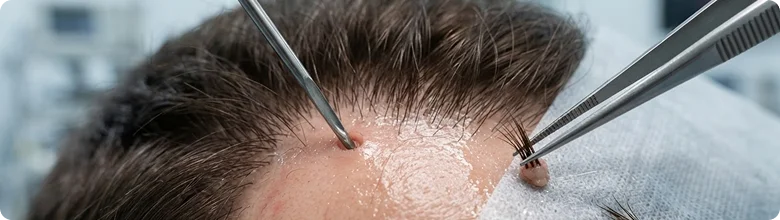
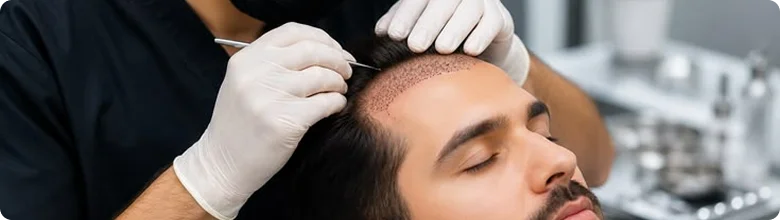
FUE (Follicular Unit Extraction)
DHI (Direct Hair Implantation)
Grafts are implanted directly using an implanter tool, allowing simultaneous channel-opening and placement.
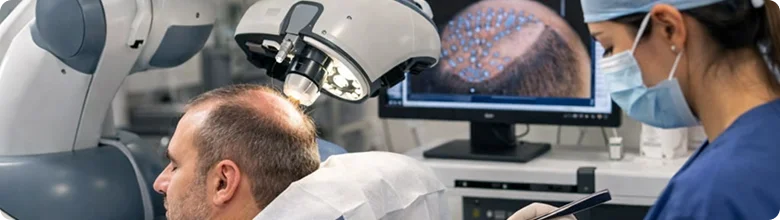
Robotic Hair Transplant
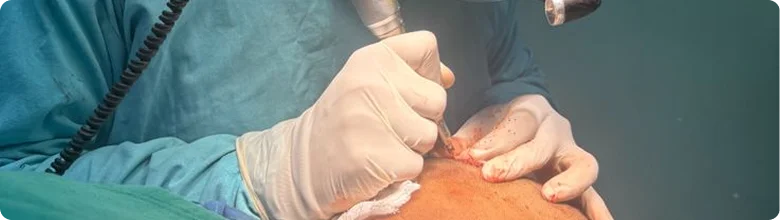
Body Hair Transplant
For patients without sufficient scalp donor hair, follicles are taken from body donor areas and implanted into the scalp, accounting for differences in hair texture, size, and color.
Why Choose Enfield Royal Clinic Dubai For Hair Transplant?
Choosing a hair transplant clinic abroad requires more than comparing prices. U.S. patients should understand who evaluates their hair loss, plans and performs the procedure, and manages follow-up after they return home.
Physician-led care: Dr. Sannia Awais is identified by Enfield Royal Clinic as a hair restoration and hair transplant specialist, dermatologist, and senior aesthetic practitioner. Clear clinical responsibility: Patients should know who manages consultation, candidacy assessment, hairline design, graft planning, surgery, and post-operative care. Long-term FUE planning: Treatment should consider donor supply, graft distribution, hairline design, existing hair, and future hair loss—not just the number of grafts. Clinical standards: Patients should verify the clinic’s Dubai healthcare licence, physician credentials, and applicable accreditations. Transparent planning and support: Treatment should clearly outline graft requirements, procedure stages, and aftercare, with coordinated support for international patients and continued follow-up after returning to the U.S.
What we offer to our happy customers
Every patient goes home from Dubai with a complete aftercare pack, put together to cover everything you need for a smooth recovery and successful graft growth, so there’s no scrambling for supplies once you’re back in Houston. Follow the included instructions and use each product as directed to give your results the best possible chance of success.
Direct access to your Houston care team, day or night, if you have any questions or concerns during your recovery, you’re never left waiting for answers.
A clear, written breakdown of exactly what to do (and avoid) in the days and weeks after your procedure, so you’re never relying on memory alone.
A protective sheet for your pillow, since it’s normal for grafts to weep or bleed lightly for the first night or two.
For keeping the transplanted area clean and supporting healing you’ll use this several times a day in the first week.
Prescribed medication to keep you comfortable and manage any swelling in the days immediately following surgery.
A specially formulated, mild shampoo for your first hair washes, designed not to disturb healing grafts.
A bag to bring everything home with you, so your recovery essentials stay organized from Dubai to Houston.
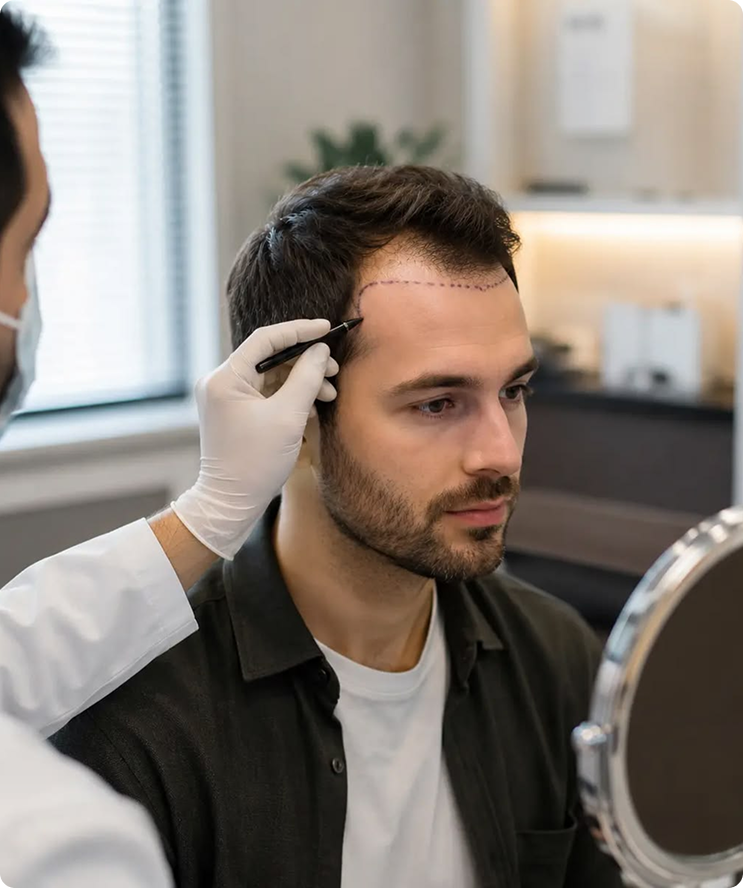
Hair Transplant Testimonials From International Patients
These testimonials reflect individual patient experiences at Enfield Royal Clinic Dubai from of texas and new jersey patients. Patients provided consent for their feedback to be shared. Individual results vary, and these accounts do not predict the outcome of another patient’s treatment.
Verified Case File
“I had my hair transplant from this clinic six months ago and was waiting for the result before posting the review. The experience with Enfield was amazing. From the consultation to the treatment, everything went flawless. I have got amazing results.”

John W.
- Abu Dhabi, UAE
PROCEDURE
Hair transplant
STATUS
Six months post-procedure
Verified Case File
“I have done my surgery successfully. I would like to say thank you to Dr. Awais and the team.”
Alex Z.
- Dubai, UAE
PROCEDURE
Hair transplant
STATUS
Post-operative
Verified Case File
“I underwent an FUE hair transplant at Enfield Royal Hair Treatment Clinic and have gotten feasible and advantageous results.”
Gal A.
- Dubai, UAE
PROCEDURE
FUE hair transplant
STATUS
Post-treatment
Frequently Asked Questions
Can U.S. residents get a hair transplant in Dubai?
Absolutely, Dubai is one of the most open medical tourism destinations on the planet, and U.S. citizens are welcomed specifically. You don’t need a pre-approved visa, just a valid passport (good for at least six months), and you will get a free 30-day visa on arrival at Dubai International Airport. There are no restrictions on Americans receiving elective procedures here, and the city has spent the last decade building infrastructure specifically for international patients. English is the default language in every top clinic, payment is simple with international cards, and the whole experience is designed to feel familiar, not foreign.
Is it safe to get a hair transplant in Dubai?
Hair-transplant safety depends on the clinic, licensed medical professionals, surgical roles, infection-control standards, and continuity of care. ISHRS warns patients about “black market” hair-transplant clinics where unlicensed or inadequately trained personnel perform surgical work. The CDC also identifies infection, continuity-of-care, medication, and travel-related risks associated with medical tourism.
Before travelling, confirm the treating clinician’s credentials, the facility’s authorization, who performs each surgical stage, and how follow-up is managed after returning to the United States.
How do I verify my hair-transplant doctor's credentials?
Ask for the clinician’s full name, professional title, relevant qualifications, license or registration details, and exact role in the procedure. Dubai requires healthcare professionals providing healthcare services to be licensed, with licensing handled through DHA’s regulatory system and Sheryan.
Also ask who performs extraction, recipient-site creation, and graft placement. Do not rely on a clinic’s general statement that a procedure is “doctor-led” without understanding the actual division of responsibilities.
Who performs the FUE procedure at Enfield Royal Clinic Dubai?
Dr. Sannia Awais is identified by Enfield Royal Clinic as a Cosmetic Dermatologist and Hair Specialist, with specialties including aesthetic medicine, dermatology, and hair restoration. The clinic’s published profile also lists hair transplantation among her areas of expertise.
The responsible clinician for each surgical stage should be confirmed in the patient’s treatment plan before travel. This includes FUE extraction, recipient-site creation, graft placement, and post-operative follow-up.
How do I know if I am a candidate for a hair transplant?
Candidacy requires clinical assessment. The physician considers the pattern and cause of hair loss, donor density, scalp condition, medical history, treatment area, and anticipated future hair loss. Some patients may require medical management or further assessment before surgery.
A virtual consultation can help establish preliminary suitability, but the final treatment plan requires the appropriate clinical examination.
How many grafts might I need?
There is no universal graft count. The appropriate number depends on hair-loss pattern, donor supply, recipient area, desired coverage, and long-term planning.
The ISHRS 2025 Practice Census reported an average of 2,347 grafts for a first surgical procedure among participating physicians. That figure is a population-level practice statistic, not a recommendation for an individual patient.
How do I protect my donor area from overharvesting?
Donor follicles are a limited resource. A sound treatment plan considers current donor density, safe extraction, future hair loss, and the possibility of later treatment.
Ask how donor density is assessed, how the graft estimate was calculated, and how much donor reserve the plan intends to preserve. A higher graft count is not automatically a better treatment plan.
What is the difference between FUE and FUT?
FUE removes individual follicular units from the donor area. FUT removes a strip of tissue from the donor area before follicular units are prepared for transplantation. Each technique has different surgical characteristics and scarring patterns.
Neither technique is automatically right for every patient. The appropriate approach depends on donor characteristics, treatment goals, previous procedures, scalp factors, hairstyle preferences, and graft requirements.
How is my hairline designed?
Hairline design considers age, facial proportions, existing hair pattern, donor supply, current recession, and anticipated future hair loss. The objective is to create a design that fits the patient’s features and remains appropriate as native hair changes over time.
The proposed hairline and treatment priorities should be discussed with the treating clinician before surgery.
Will I need another hair transplant?
Some patients undergo additional procedures because hair loss continues, additional density is desired, treatment is staged across multiple areas, or corrective work becomes necessary.
The latest ISHRS census does not report a simple percentage of individual patients who “need” a second transplant. Instead, 30.8% of responding physicians reported averaging two procedures per patient, while 67.3% reported averaging one to achieve the desired restoration.
Your first treatment should therefore account for the long-term pattern of hair loss and preservation of donor supply.
What should my treatment plan include?
Before travelling, request a written plan covering the recommended technique, estimated graft count, treatment areas, responsible clinicians, procedure inclusions, medication and aftercare, follow-up arrangements, and additional or optional costs.
For international patients, also confirm the arrangements for communication after returning to the United States.
How long should I stay in Dubai after the procedure?
There is no single stay duration that applies to every patient. The appropriate timeline depends on the procedure, healing progress, follow-up requirements, and the treating clinician’s assessment.
Do not book a fixed return flight simply because a clinic advertises a standard package length. Confirm the travel plan with the treating clinician.
When can I fly back to the United States?
Your treating clinician should provide individualized travel guidance. Surgery and prolonged immobility during travel can increase blood-clot risk, and the CDC advises medical tourists to discuss air travel after surgery rather than applying one universal timetable.
Before departing Dubai, obtain clearance and keep your treatment documentation available for any U.S. healthcare provider who may need to assist with follow-up.
What aftercare will I receive after the hair transplant therapy in Dubai?
The clinic should provide written instructions covering wound care, washing, sleeping position, activity restrictions, prescribed medication, warning signs, and follow-up. International patients should also receive a clear communication channel for questions after returning home.
The exact aftercare protocol should come from the treating clinical team rather than a generic online timetable.
How should I arrange follow-up after returning to the United States?
Arrange the follow-up pathway before leaving Dubai. Retain your procedure summary, graft documentation, medication information, treatment photographs, and clinician contact details.
The CDC specifically recommends that medical tourists obtain copies of their overseas medical records and provide them to healthcare professionals involved in subsequent care.
What happens if I develop a complication after returning home?
Contact the treating clinic through its designated clinical or emergency communication channel and seek urgent medical care in the United States when the situation requires it.
Give the U.S. healthcare provider your procedure records, graft count, technique, medications, and details of the surgery abroad. Do not delay urgent assessment while waiting for a remote response from the overseas clinic.
Are hair-transplant results guaranteed?
No. Hair transplantation produces individual outcomes influenced by donor characteristics, treatment planning, procedure, aftercare, and biological response. No responsible clinic should guarantee a specific density, growth pattern, or cosmetic result.
A proper consultation should explain the realistic treatment objective and the limitations of the available donor supply before surgery.
Clinic Insights & Highlights
Discover Hair Transplant and Restoration through our collection of informative reels. Watch expert insights, consultation highlights, clinic introductions, and helpful information about our treatments and services.
Our Clinic Locations
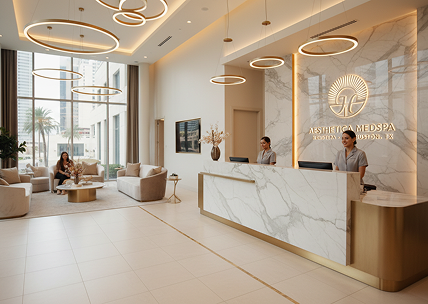
Houston, TX
United States (Flagship)
Our primary consultation, diagnostics, bloodwork, and comprehensive aftercare hub.
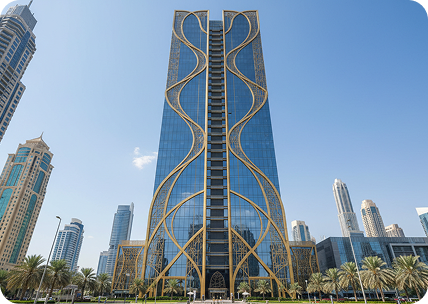
Dubai, UAE
United Arab Emirates
State of the art, DHA-licensed dedicated hair transplant surgical center.

Request Your Private Hair Transplant Consultation
Begin your hair-restoration journey with a private consultation at Enfield Royal Clinic Houston and Dubai. Share your hair-loss concerns, treatment goals, previous procedures, and expected travel time frame. The clinical team can then outline the consultation process, discuss the information needed for candidacy assessment and explain the next steps for exploring hair-transplant treatment in Dubai.