
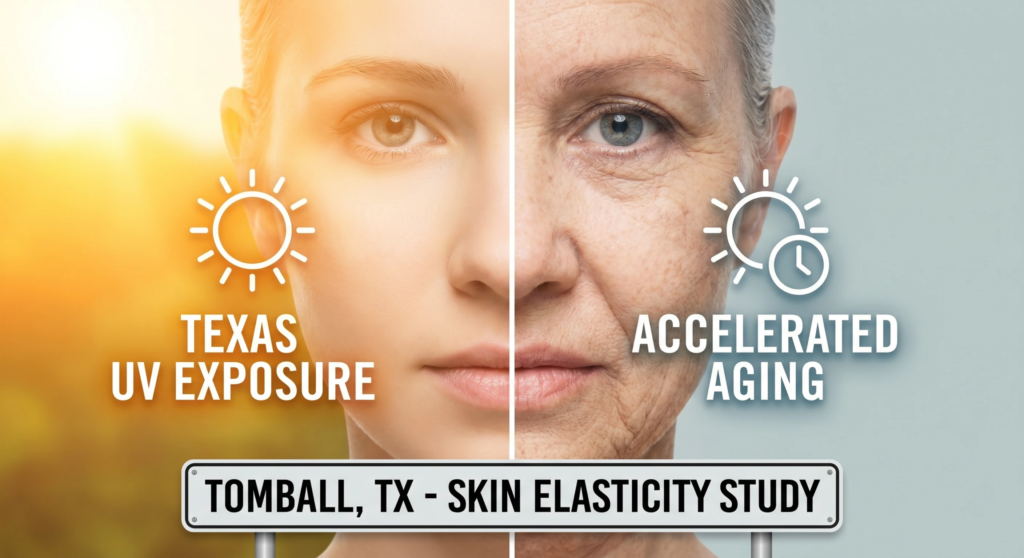
Texas has conditions that permit outdoor activities and sunshine year-round. But for individuals in Tomball, Magnolia, Spring, and The Woodlands who are continually exposed to the sun, there are some side effects, including skin relaxation, irregular pigmentation, and wrinkle development early in life, and decreased skin elasticity.
It is important to understand that although getting older is an inevitable process, our surroundings have a major impact on the rate at which we start experiencing age-related changes. High levels of UV and high temperatures, and humidity can cause collagen damage, causing “photoaging” or early signs of skin aging.
Being aware of what UV light does to the skin may be useful when planning measures to prevent skin damage and tips on how to take care of your skin.
Elasticity of the skin is the ability of the skin to stretch and return to its normal shape. Young and healthy skin is plump, smooth, and tight due to the abundance of collagen and elastin fibers within it.
Both these compounds play a vital role in the function of:
The skin loses its strength and suppleness as collagen and elastin decrease with age.
Texas experiences ample sunshine for most of the year. Citizens from Tomball, Magnolia, Spring, and The Woodlands are exposed to plenty of UV radiation whenever they move back and forth to work or when involved in exercises. UV radiation affects the body as they damage collagen fibers, elastin, and the skin cells of the skin. The accumulation of such types of radiation results in premature aging of the skin. Photoaging and chronological aging are two forms of aging that are not similar, as photoaging occurs early.
UV light triggers the activity of certain enzymes responsible for degrading collagen in the skin tissue. As collagen is responsible for providing firmness and support, its degradation leads to:
With time, the skin will lose elasticity and strength.
Elastin is responsible for maintaining the elasticity of the skin, allowing it to retract when stretched or moved. With prolonged exposure to the sun, these fibers may be damaged, leading to:
Ultraviolet rays also stimulate the production of melanin, which causes:
These effects can be found in the cheeks, forehead, chest, and hands.
The cumulative effect of UV rays causes oxidative stress in the skin. This process destroys normal cells and contributes to aging. Inflammation caused by UV damage can lead to:
Several individuals living in Tomball and neighboring Texas towns will likely exhibit signs of accelerated aging due to long-term exposure to the sun. Typical signs are:
Due to the warm climate and active lifestyles of residents in The Woodlands, Magnolia, Spring, and Tomball, outdoor living is a favored pastime. Common sources of UV damage include outdoor exercise, sports, gardening, swimming, and driving. Even small exposure to the sun on a daily basis accumulates over many years. Patients may not realize how much harm can be done when they are driving, walking to the store, running errands, sitting to watch windows, or doing recreational activities outside the home. UV rays can penetrate the cloud and glass, so damage can still occur in cloudy weather and on glass.
Skin elasticity must be maintained to prevent premature aging of the skin.
The broad spectrum of sunscreen is considered to be one of the most efficient ways to keep collagen and elastin safe from UV exposure. For optimal effects:
Skincare treatments that include such ingredients as antioxidants, retinoids, peptides, and growth factors can be used to stimulate the development of collagen in the skin. They can also be useful for:
Healthy skin requires adequate hydration, nutrition, sufficient sleep, no smoking, no stress. These factors will help to decrease inflammation.
With new technological advancements, there are non-invasive procedures available that can increase skin elasticity, produce more collagen, and diminish any evidence of photodamage.
This procedure induces the natural production of collagen Therapy and may help with:
PRP and PRF treatments make use of the body’s natural growth factors to promote skin renewal. Some of the applications of PRP and PRF include:
Lasers are used to address conditions like discoloration, texture problems, and collagen deficiency that are caused by UV rays. The benefits of this treatment include:
Some injectable procedures can help you restore facial support and reduce facial wrinkles associated with the loss of collagen and volume. In case these procedures are administered appropriately, they will give you a naturally rejuvenated look, rather than an overly dramatic one.
One of the key things that patients should do is start their prevention early on, as UV exposure effects are cumulative; they add up over time, even though you might not notice them immediately. Early skin care practices can include:
Even though exposure to the sun can accelerate the aging process of your skin, there is no need to worry since contemporary skin care techniques can help you regain your skin’s health, elasticity, and look better. As you learn about how the sun’s rays damage collagen and elastin, you will manage to retain your youth and vibrancy in your skin for many years to come.
Protection from the sun’s rays is vital for healthy skin. Using sunscreen lotions that have an SPF rating of 30+, drinking plenty of fluids, and applying clinically recommended skincare products can help maintain healthy collagen and reduce the risk of skin damage caused by UV rays.
Various non-surgical methods can correct the problems associated with aging skin. Non-surgical treatments include skin tightening, such as microneedling, platelet-rich plasma treatment, platelet-rich fibrin treatment, laser skin rejuvenation, and collagen production.
The symptoms of aging skin can be corrected even at the age of 20 or 30, when collagen is abundant.
Let Us Know Where to Send Your Code
Valid once per new client. Expires in 30 day