


 Skip to content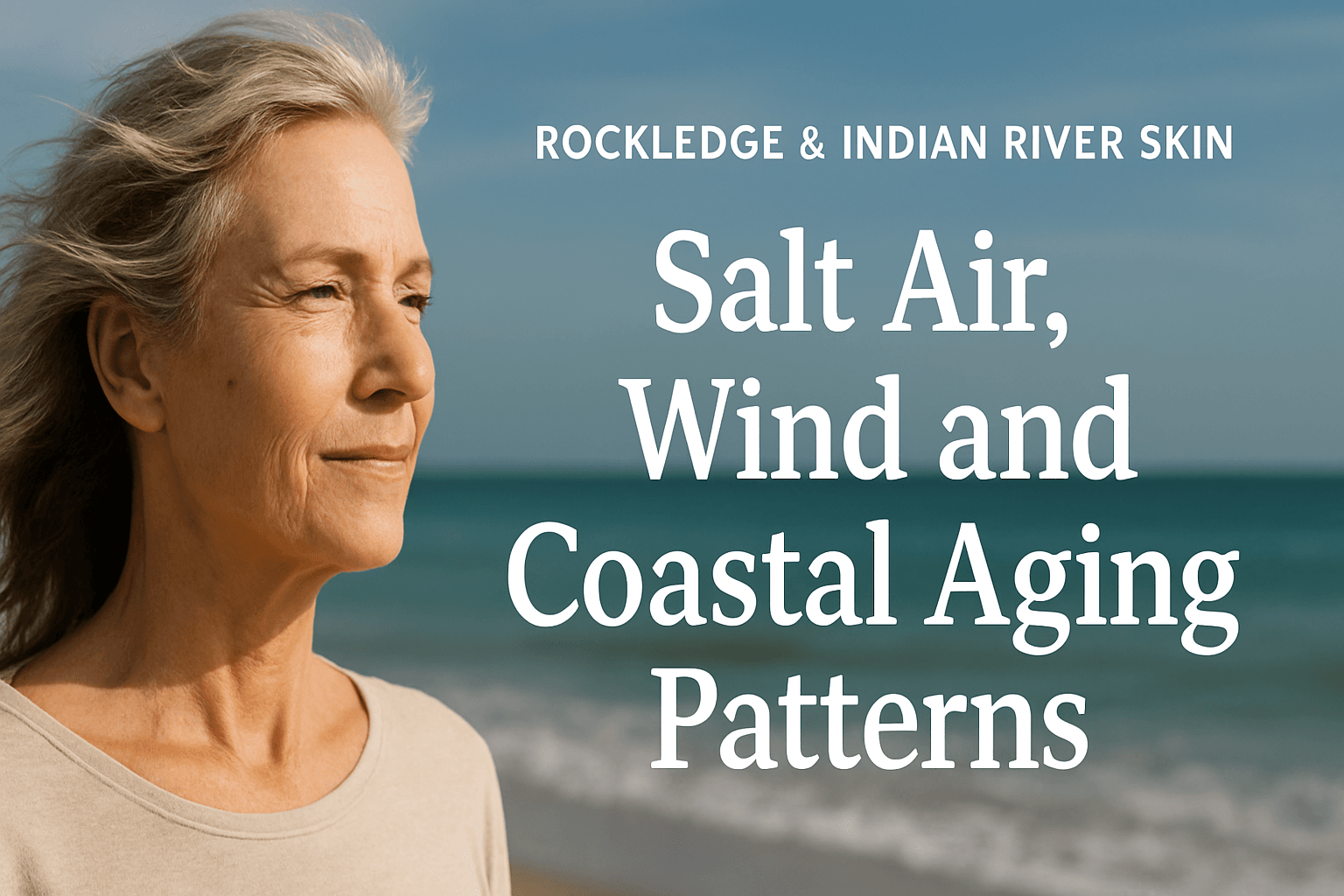
Living near the Indian River in Rockledge means waking to salt-tinged air and steady east-west breeze. Humidity hovers between 70–85% most mornings. Light bounces off the lagoon’s surface, adding reflected UV to the direct sun overhead. The atmosphere feels alive—but that same environment quietly reshapes skin over time.
This micro-climate creates aging patterns that differ from what dermatologists observe in inland Florida communities. The combination of salt aerosol, persistent wind, and water-reflected light accelerates specific changes in the skin’s barrier, texture, and volume. Understanding these patterns helps Rockledge residents protect their skin and address damage when it appears. Our broader guide to Space Coast climate and skin health covers regional factors, but this article focuses on what Rockledge and Indian River residents experience daily.
Salt aerosol combined with wind and high humidity disturbs the lipid barrier and throws hydration balance off center. NaCl particles carried in river breeze land on exposed skin throughout the day. These particles draw moisture from the stratum corneum through osmotic pull.
Wind amplifies the effect. It strips protective surface lipids and increases transepidermal water loss by 20–30% on windy afternoons. Even when humidity reads 85%, the salt film on skin creates localized drying. Surface hydration can drop approximately 15% after a full day on the water.
We often see this pattern in Rockledge boaters who return from a morning on the lagoon with tight, rough-feeling skin. The humidity feels wet, yet the salt layer acts like a sponge pulling moisture outward.
The cheeks, temples, perioral area, and neck V-zone show accelerated aging in riverfront residents. These areas receive the most wind exposure and reflected UV. Squinting into glare also causes repetitive muscle contraction around the eyes and forehead.
Dock workers along the Indian River often develop deeper crow’s feet and lateral cheek lines than their age would suggest. The angle of light bouncing off the water targets the lower face and neck more than overhead sun alone. Boaters and riverfront residents who’ve accumulated years of UV exposure often benefit from dermal fillers tailored to sun-damaged faces.
Wind causes micro-tears in the outermost skin layers and drives repetitive drying-rewetting cycles. These cycles weaken the barrier and leave behind more visible etched lines, especially around the eyes and mouth. Fine lines that might remain superficial in calmer climates become fixed creases faster.
Riverfront walkers in Rockledge often notice rougher skin texture by their late 30s—about 5–7 years earlier than typical inland timelines.
Brown patches on the cheeks and neck appear frequently in patients who spend time near the lagoon. Reflected UV intensifies melanin production in these exposed zones. Broken capillaries on the nose and chin also develop earlier, driven by repeated flushing after hot, windy days.
Some patients notice increased facial redness that persists for hours after river exposure. This vascular reactivity tends to worsen with cumulative wind and salt contact over years.
Salt aerosol interacting with UV light generates more free radicals on the skin’s surface. These reactive molecules trigger lipid peroxidation in cell membranes and accelerate collagen breakdown. The process compounds: damaged lipids weaken the barrier, which allows more salt penetration, which produces more oxidative stress.
Reflected UV from the lagoon adds roughly 25% more UV exposure to the lower face compared to shaded environments. On days when the UV index reaches 8–11, Rockledge residents receive a higher cumulative dose than they might realize.
Our Rockledge team notices that patients in their 40s who have spent a decade near the river often show collagen density loss comparable to inland patients in their early 50s. The timeline shifts forward when salt, wind, and reflected light work together.
Gentle cleansers with non-stripping surfactants remove salt film without depleting remaining lipids. Rinsing thoroughly after any time on the river matters more than most people realize. Ceramide-rich moisturizers help rebuild the lipid matrix that salt and wind erode.
Applying a heavier occlusive layer at night supports overnight barrier repair. This step becomes especially important during spring and fall when wind speeds increase along the lagoon.
Zinc-based SPF 50 provides broad protection against both direct and reflected UV. Reapplication every 2 hours on the water is necessary—sweat and salt wash away chemical filters faster than labels suggest. Wide-brimmed hats, UV-blocking sunglasses, and neck coverage reduce exposure to the zones that age fastest.
Physical barriers outperform products alone. A lightweight neck gaiter blocks wind and UV simultaneously during morning boat trips. Chronic breakouts from river humidity and outdoor sports are covered in our Brevard County acne and breakout guide.
Choosing early morning or late afternoon for river time reduces peak UV exposure. Post-boat showers within 30 minutes of returning prevent salt from sitting on skin. Night-time barrier repair routines—cleanse, hydrate, occlude—give skin time to recover before the next day’s exposure.
Years of wind, salt, and sun flatten midface volume and deepen expression lines faster in riverfront faces than in inland patients. The cheeks hollow earlier. The jawline softens. Crow’s feet and forehead lines become fixed rather than dynamic.
Correction in this context emphasizes natural restoration rather than overfilling. For residents who feel that years of river wind have hollowed their cheeks and softened their jawline, our expert team at Enfield Royal Med Spa uses dermal filler plans designed around Indian River lifestyles to quietly restore structure rather than change someone’s features.
When constant squinting into glare starts to carve permanent lines between the brows and around the eyes, carefully dosed neuromodulator work along the upper face in Rockledge often prevents those lines from becoming fixed. The goal is relaxation of overactive muscles, not frozen expressions.
Microneedling creates controlled micro-injury that triggers collagen rebuilding. Adding platelet-rich plasma concentrates growth factors at the treatment site. The result is improved texture and a more resilient barrier over 2–3 sessions.
These concepts are built into PRP-assisted microneedling programs our Rockledge clinic uses for climate-stressed skin, where collagen support and barrier repair matter more than aggressive resurfacing. Protocols factor in humidity and outdoor habits when planning treatment intervals—typically 4–6 weeks apart.
Deeper thinning, crepey neck skin, and collagen loss in specific zones sometimes require more than surface-level work. In more advanced thinning along the neck and chest, some riverfront patients move into targeted PRP injection plans in Rockledge that support deeper tissue regeneration.
These injections deliver growth factors directly into areas where the dermis has thinned. Results build gradually over 3–6 months as new collagen forms. For deeper collagen support after decades of boating and fishing, many Rockledge patients choose PRP and exosome microneedling treatments.
Effective long-term care starts with understanding the environment. Rockledge’s salt air, river wind, and reflected UV create conditions that require adjusted daily routines and periodic professional support. The sequence matters: protect daily, evaluate seasonally, treat when patterns warrant intervention.
Let Us Know Where to Send Your Code
Valid once per new client. Expires in 30 day