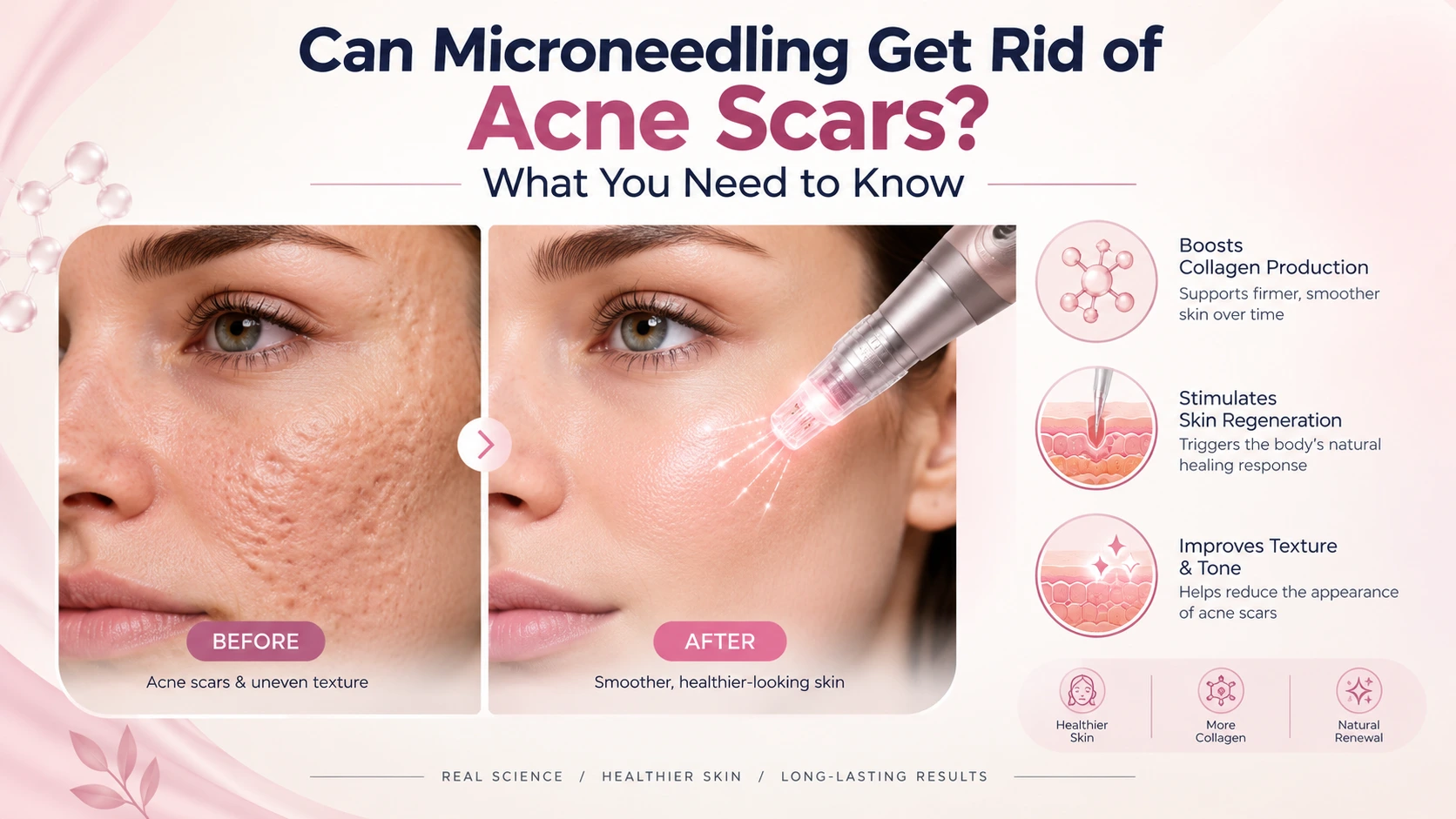
Acne scars develop when inflammation from acne damages the skin and affects normal collagen production during healing. Some scars create depressions in the skin, while others appear raised or cause changes in pigmentation. Their depth, type, location, and the condition of the surrounding skin can all affect how they respond to treatment. Because established scars involve changes within the skin rather than surface-level discoloration alone, they often require treatments that work deeper than standard skincare products.
Microneedling uses a device with fine needles to create controlled micro-injuries in the skin. These tiny channels trigger the body’s natural wound-healing response, which supports the production and remodeling of collagen and elastin. Over time, this process can help improve uneven texture and make certain depressed acne scars appear less noticeable.
The treatment does not physically remove a scar in one session. Instead, improvements generally develop gradually as the skin undergoes collagen remodeling.
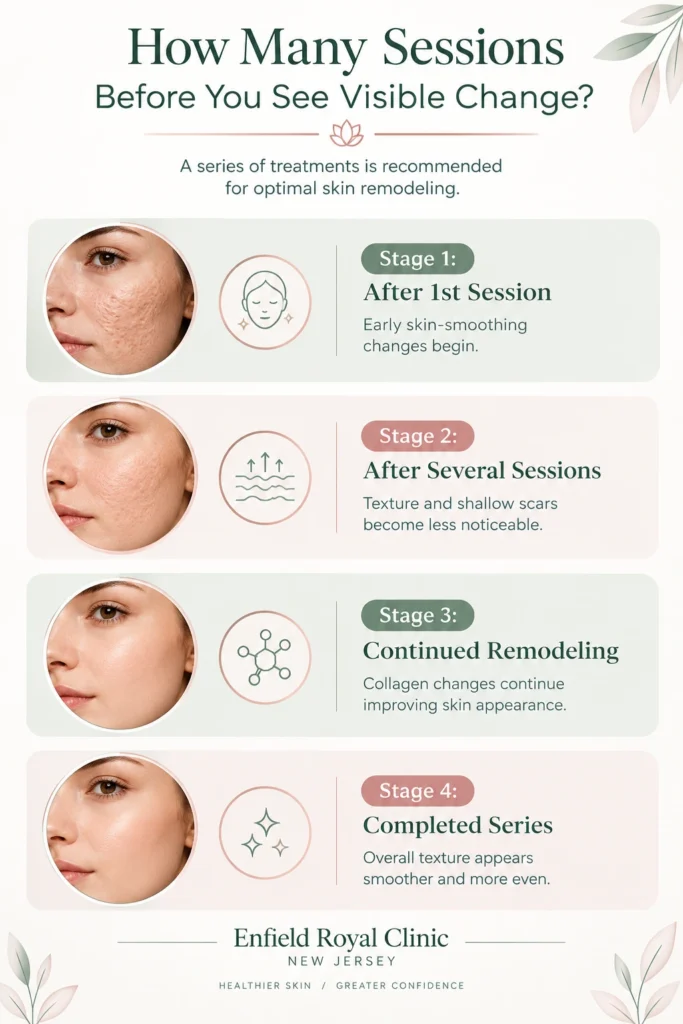
The number of sessions depends on the type and depth of the scars, skin condition, and individual response. A series of treatments is commonly recommended rather than expecting a major change after one appointment.
| Treatment Stage | What You May Notice |
| After the first session | Early skin-smoothing changes may begin |
| After several sessions | Texture and shallow scars may become less noticeable |
| During continued remodeling | Collagen changes can continue improving skin appearance |
| After completing the recommended series | Overall texture may appear smoother and more even |
Your provider can determine an appropriate treatment schedule after assessing the scars and overall skin condition.
Microneedling is generally more suitable for certain depressed or atrophic acne scars, particularly shallow rolling and some boxcar scars. It may also improve overall uneven skin texture surrounding acne scars.
| Acne Scar Type | Potential Response to Microneedling |
| Rolling scars | Often suitable because of their shallow, uneven appearance |
| Shallow boxcar scars | May respond as collagen remodeling improves texture |
| Deep boxcar scars | May require additional or alternative treatments |
| Ice-pick scars | Often need more targeted scar treatments |
| Raised scars | Microneedling may not be the preferred approach |
There is no single acne-scar treatment that works equally well for every scar type. The appropriate option depends on scar depth, skin type, pigmentation concerns, and whether the scars are tethered beneath the skin.
| Treatment | Main Approach | Often Considered For |
| Microneedling | Controlled micro-injuries stimulate collagen remodeling | Mild to moderate texture concerns and some atrophic scars |
| Laser Resurfacing | Uses controlled laser energy to remodel the skin | Texture, pigmentation, and selected acne scars |
| Chemical Peels | Uses chemical solutions to exfoliate and renew the skin | Surface irregularities and pigmentation |
| Subcision | Releases fibrous bands pulling depressed scars downward | Certain rolling or tethered scars |
Microneedling may be paired with other treatments depending on the patient’s skin concerns and clinical plan. Some protocols use PRP alongside microneedling, and selected topical products may be incorporated to support post-treatment skin care.
Combination treatment should be personalized rather than automatically adding multiple procedures. Your provider can determine whether an additional therapy is appropriate based on scar type, skin sensitivity, pigmentation, and treatment goals.
If acne scars are affecting your skin texture, a consultation can help identify the type of scarring and determine whether microneedling is appropriate for you. A personalized consultation at Enfield Royal Clinic can also help establish the number of sessions and whether another treatment or combination approach may be more suitable.
Patients looking for microneedling for acne scars in New Jersey can visit Enfield Royal Clinic, conveniently located for communities throughout Somerset County and surrounding Central New Jersey.
Enfield Royal Clinic
1018 US-202, Branchburg, NJ 08876
Located along US-202, the Branchburg clinic is accessible from surrounding communities through major routes, including US-22, NJ-28, and US-206.
| From | Approx. Distance | Typical Drive | Main Route |
| Bridgewater | ~7 miles | ~14 min | US-22 / US-202 |
| Somerville | ~7 miles | ~12 min | Route 28 / US-22 |
| Raritan | ~6 miles | ~12 min | NJ-28 |
| Hillsborough | ~11 miles | ~18 min | US-206 |
| Manville | ~11 miles | ~17 min | US-22 / NJ-28 |
| Readington | Nearby area | ~5 to 20 min | US-202 |