


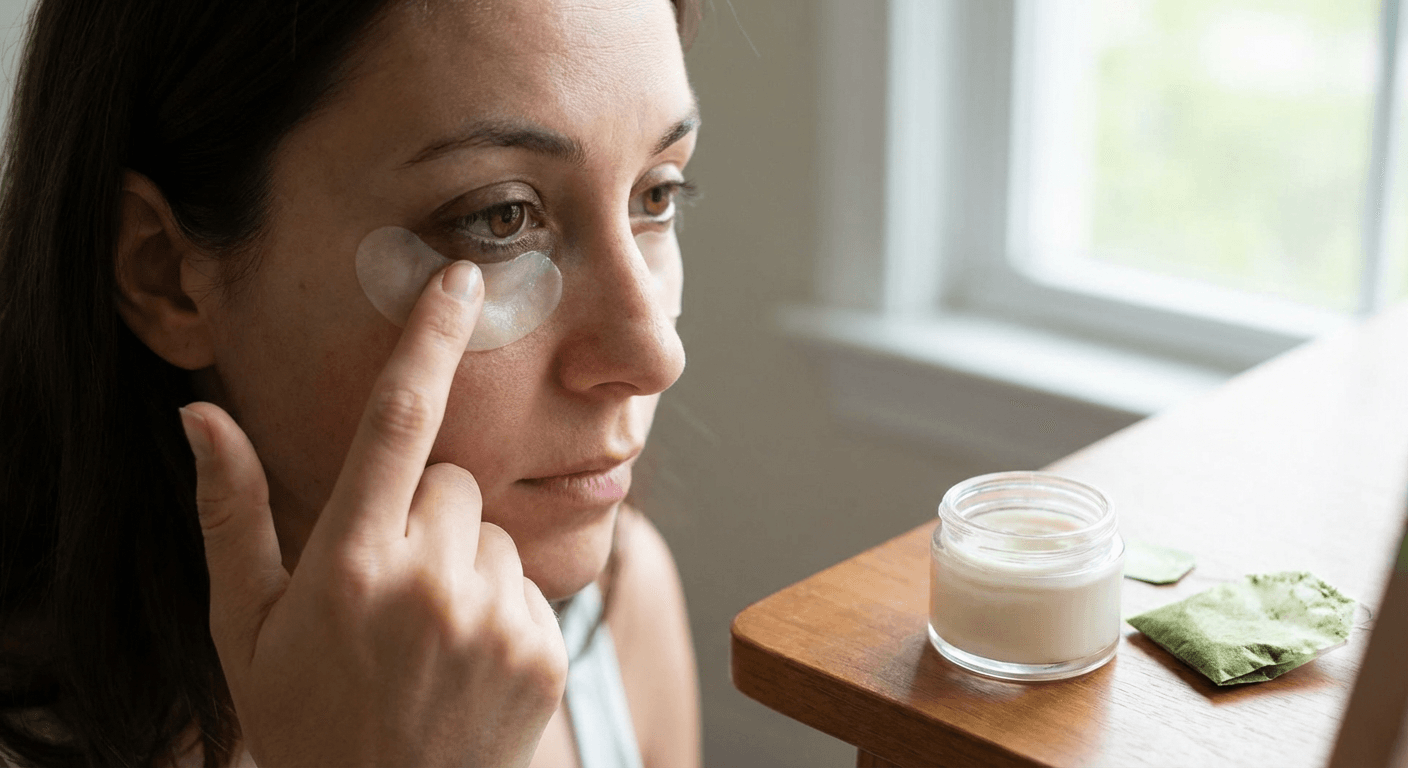
Dark circles under the eyes result from multiple causes. Treatment requires accurate diagnosis,MD. Madhannagari Reddy at Enfield Royal Med Spa and his expert team identify whether dark circles stem from hollows, pigment, or visible vessels, then match the correct treatment to each patient.
Why Brevard County patients choose Enfield Royal Med Spa (Viera), Rockledge:
[Book Your Consultation] | [ Call +1 321-502-4042 ] | [ See Before & After Photos for Review ]
Serving Viera, Rockledge, Cocoa, Melbourne, Merritt Island, and all of Brevard County, Florida.
Dark circles form from four distinct causes. Each cause requires a different treatment. Understanding the cause determines which treatment produces results.
Dark circles develop from structural changes, pigmentation, visible blood vessels, or combinations of these factors.
| Type | Clinical Term | Cause | Appearance |
| Structural | Infraorbital hollowing / Tear trough deformity | Volume loss creates shadows under the eye | Worse in overhead lighting; shadow-like darkness |
| Pigmented | Periorbital hyperpigmentation | Excess melanin deposits in the under-eye skin | Brown or dark brown tint; does not change with sleep |
| Vascular | Vascular discoloration | Blood vessels are visible through the thin periorbital skin | Blue or purple tone; more visible when fatigued |
| Mixed | Combined etiology | Two or more causes present simultaneously | Variable appearance; requires combination treatment |
A 2021 study in the Journal of Cosmetic Dermatology found that 92% of patients presenting with dark circles had mixed or overlapping causes, making proper diagnosis essential before treatment.
A self-assessment helps identify dark circle type before consultation. Answer these questions:
Structural Dark Circles (Hollows):
Pigmented Dark Circles (Brown):
Vascular Dark Circles (Blue/Purple):
Mixed Dark Circles:
Self-assessment provides guidance. Clinical consultation confirms dark circle type and determines treatment eligibility.
Treatment selection depends on the cause. [Practice Name] offers five evidence-based treatment options for under-eye dark circles.
Under-eye filler treats structural dark circles caused by infraorbital hollowing. Hyaluronic acid filler restores volume to the tear trough area, reducing shadows created by hollows.
Best for: Structural dark circles, tear trough deformity, under-eye hollows
How it works: Hyaluronic acid filler is placed beneath the skin to restore volume. The filler lifts the hollow area, eliminating the shadow that creates the dark circle appearance.
FDA context: Certain hyaluronic acid fillers (including Restylane Eyelight and Juvéderm Volbella) have FDA approval for infraorbital hollow correction.
Sessions: 1 treatment session
Duration: 12–18 months, typical
Downtime: Bruising and swellingare possible for 7–14 days
The tear trough area contains critical anatomy. Practice Name uses cannula technique/advanced injection protocols to minimize risks in this delicate region.
Learn More About Tear Trough Filler
Fractional CO2 laser and similar resurfacing devices treat pigmented dark circles and improve overall under-eye skin quality. Laser treatment targets melanin deposits, stimulates collagen production, and improves skin texture.
Best for: Pigmented dark circles, periorbital hyperpigmentation, fine lines, skin texture
How it works: Fractional laser creates controlled micro-injuries in the skin. The healing process reduces pigment and stimulates new collagen formation.
Sessions: 1–3 treatments (varies by severity and Fitzpatrick skin type)
Downtime: 5–10 days of redness and peeling
Candidacy depends on skin type and pigment depth. Darker Fitzpatrick skin types require modified protocols to prevent post-inflammatory hyperpigmentation.
Learn More About How Laser Skin Resurfacing Helps You Get Rid of Dark Circles
PRP microneedling uses platelet-rich plasma to improve under-eye skin quality. PRP contains growth factors that stimulate collagen production and skin regeneration.
Best for: Thin under-eye skin, early dark circles, skin quality improvement, prevention
How it works: Microneedling or collagen induction therapy creates controlled micro-channels. Platelet-rich plasma (extracted from the patient’s blood) is applied topically or injected. Growth factors promote cellular renewal.
Sessions: 3–4 treatments spaced 4–6 weeks apart
Downtime: Minimal; redness for 24–48 hours
PRP microneedling works well as a standalone regenerative treatment or combined with other dark circle treatments.
Learn More About PRP Microneedling for under-eye dark circles
Chemical peels treat pigmented dark circles by removing melanin-rich surface skin cells. Peels accelerate cell turnover and reduce hyperpigmentation.
Best for: Mild to moderate pigmented dark circles, periorbital hyperpigmentation
How it works: A chemical solution is applied to the periorbital area. The peel removes outer skin layers containing excess melanin. New skin forms with reduced pigmentation.
Sessions: Series of 3–6 peels for optimal results
Downtime: 3–7 days, depending on peel depth
Periorbital skin requires specialized peel formulations. [Practice Name] uses peels designed for the delicate under-eye area.
Learn More About Chemical Peels
Treatment matching follows clinical evidence. [Practice Name] uses a cause-based treatment algorithm:
| Dark Circle Type | Primary Treatment | Supporting Treatments |
| Structural (Hollows) | Tear trough filler | Midface filler if needed; skincare for maintenance |
| Pigmented (Brown) | Laser resurfacing OR chemical peels | Brightening skincare; sun protection |
| Vascular (Blue/Purple) | Laser/light-based devices | Skincare with vitamin K; lifestyle modifications |
| Mixed | Combination treatment plan | Filler + laser + skincare protocol |
Research supports cause-based treatment matching. A 2019 study in Dermatologic Surgery found that treatment plans matched to etiology produced 73% higher patient satisfaction compared to standardized approaches.
Under-eye dark circle treatment produces improvement in most patients. Complete elimination is not always possible. Realistic expectations lead to higher satisfaction.
Under-eye treatment requires expertise in periorbital anatomy. [Practice Name] prioritizes safety through:
The infraorbital region contains critical vascular structures. Provider training and technique matter significantly for under-eye procedures.
Under-eye dark circle treatment cost varies based on treatment type, severity, and the number of sessions required.
| Treatment | Typical Cost Range | Sessions Needed |
| Under-eye filler (tear trough) | $600–$1,200 | 1 session |
| Fractional CO2 laser | $800–$1,500 per session | 1–3 sessions |
| PRP microneedling | $400–$700 per session | 3–4 sessions |
| Chemical peels | $150–$400 per session | 3–6 sessions |
| Medical-grade skincare | $100–$300 initial investment | Ongoing |
Pricing is provided for informational purposes. Consultation determines accurate treatment cost.
[Practice Name] serves patients throughout Brevard County, Florida. The practice is located in [Rockledge/Viera] with convenient access for residents of:
Dark circles from sleep deprivation represent only one cause. Structural hollowing, pigmentation, and visible blood vessels cause dark circles regardless of sleep. Genetics, aging, and sun exposure contribute more significantly than sleep in most patients. Cleveland Clinic identifies volume loss and pigmentation as the primary causes in adults.
Under-eye fillers are safe when performed by trained providers using appropriate techniques. The infraorbital area contains important blood vessels. Risk mitigation requires anatomical knowledge, proper injection depth, and appropriate filler selection. [Practice Name] uses [cannula technique/safety protocols] to minimize complications in this sensitive area.
Under-eye fillers typically last 12 to 18 months. The tear trough area has less muscle movement than other facial areas, which extends filler longevity. Hyaluronic acid fillers gradually break down over time. Touch-up treatments maintain results.
Treatment choice depends on the cause. Filler is better for structural dark circles (hollows and shadows). Laser is better for pigmented dark circles (brown discoloration). Many patients benefit from combining both treatments. Consultation determines which treatment addresses the primary cause.
Session requirements depend on treatment type and severity:
Downtime varies by treatment:
Allergies cause dark circles through a condition called “allergic shiners.” Nasal congestion from allergies causes blood to pool in vessels beneath the eyes. The pooled blood creates a blue-purple discoloration. Treating underlying allergies reduces allergic shiner appearance.
Tear trough deformity is the clinical term for hollowing between the lower eyelid and cheek. Aging, genetics, and fat pad changes create this hollow. The hollow casts a shadow that appears as a dark circle. Tear trough filler restores volume to correct the deformity.
Cosmetic dark circle treatments are not covered by insurance. Under-eye filler, laser resurfacing, and other aesthetic treatments are elective procedures. [Practice Name] offers [financing options/payment plans] for qualified patients.
Aging worsens dark circles through multiple mechanisms:
Treatment addresses these age-related changes through volume restoration and skin quality improvement.
Prevention strategies include:
Genetics play a significant role. Prevention reduces severity but may not eliminate dark circles.
Periorbital hyperpigmentation is the medical term for excess melanin pigment around the eyes. The condition appears as brown or dark brown discoloration. Causes include genetics, sun exposure, post-inflammatory changes, and certain medications. Treatment includes laser therapy, chemical peels, and topical brightening agents.
Skincare alone works for:
Filler is needed when:
Consultation determines the appropriate treatment level.
No minimum age exists for dark circle treatment. Treatment timing depends on when dark circles become bothersome and when the cause is established. Patients in their 20s typically need only skincare. Structural changes requiring filler usually develop in the 30s and beyond. Early intervention with skincare may slow progression.
Under-eye dark circles improve with proper diagnosis and treatment matching. [Practice Name] offers comprehensive dark circle evaluation and treatment in Brevard County.
Your consultation includes:
[Book Your Dark Circles Consultation] | [ +1 321-502-4042 ]
Serving Viera, Rockledge, Melbourne, Cocoa, Merritt Island, and all Brevard County communities.
Let Us Know Where to Send Your Code
Valid once per new client. Expires in 30 day