


 Skip to content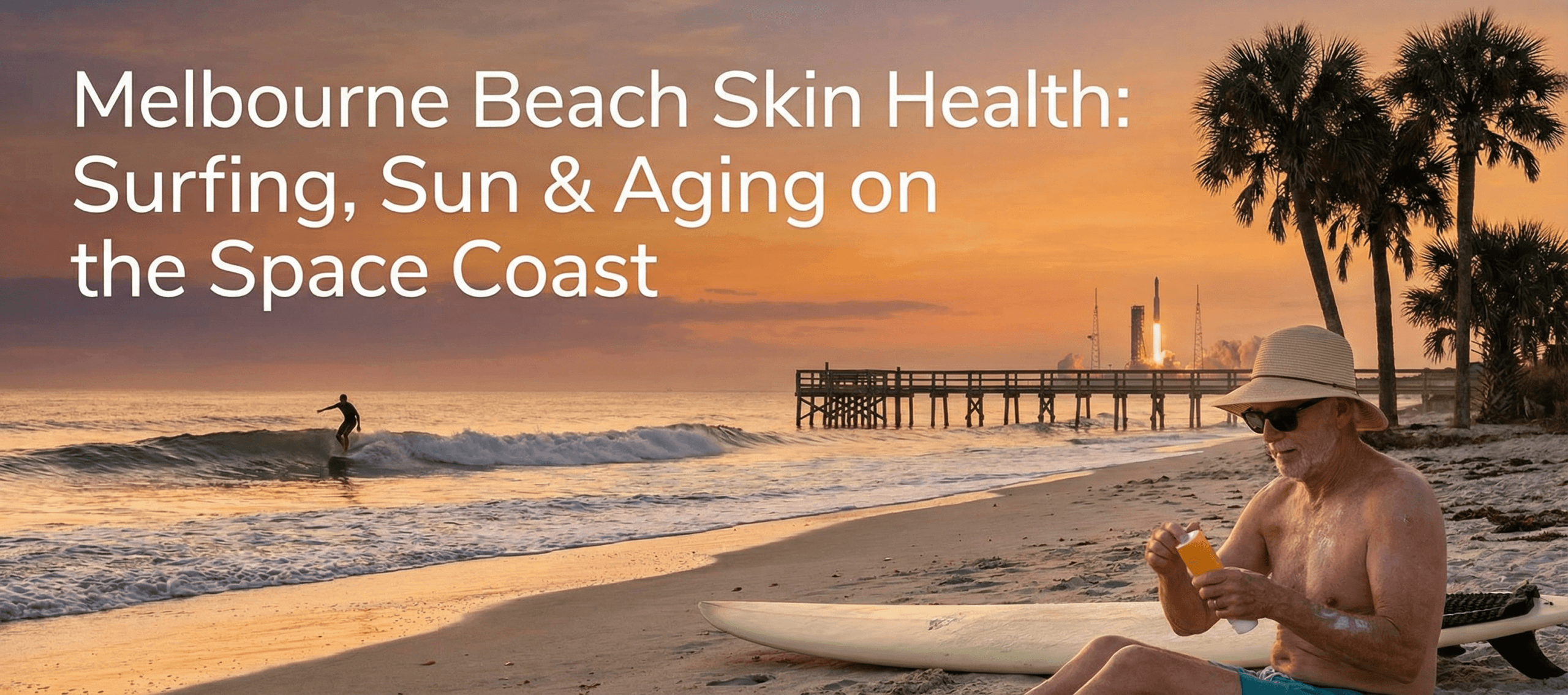
A typical Melbourne morning begins before six—paddle boards sliding into the Indian River, surfers checking the break near Indialantic, fishermen rigging lines at Sebastian Inlet while the sun climbs over a flat ocean horizon. Within thirty minutes of exposure, salt film coats the face, UV light reflects off the water surface at angles sunscreen rarely anticipates, and humidity hovers near 82 percent. The air feels cooler than inland Brevard, but the skin absorbs more radiation than most residents realize.
This double load of ocean light and salt erosion shapes a distinct aging pattern along Melbourne’s beachside corridor. Our Viera-based Enfield Royal Med Spa team, led by Dr. Madhannagari Reddy, has developed treatment protocols calibrated specifically for these conditions. Understanding the mechanisms behind coastal photoaging—detailed in our Space Coast climate and skin health guide—allows Melbourne residents to protect their skin without abandoning the ocean lifestyle that defines the region.
Melbourne’s coast presents a compounded UV environment that inland Florida residents rarely experience. Direct solar radiation reaches UV index 9–11 from May through August, but water and sand reflect an additional 10–30 percent of that light back onto exposed skin. A surfer sitting on a board for ninety minutes receives UV contact from above, below, and laterally. This omnidirectional exposure increases melanin production approximately 25 percent faster than equivalent time spent under shade-interrupted inland sun.
Salt compounds the problem through a less obvious mechanism. Ocean spray deposits sodium chloride crystals on the skin surface, where they draw moisture outward through osmotic pressure. After two hours in sun and salt air, transepidermal water loss increases by roughly 20 percent. Dehydrated skin loses elasticity and develops micro-fissures that allow deeper UV penetration. Meanwhile, humidity in the 75–90 percent range oxidizes sebum faster, generating free radicals that degrade collagen fibers before they fully mature.
A Melbourne surfer we consulted noticed asymmetric pigment patches appearing on his left cheek and forearm within a single summer season—the side facing the morning sun during his regular paddle-outs. This directional damage pattern repeats across paddle boarders, kayakers, and sailors who orient consistently toward the light. Surfers and lifelong beach residents with etched lines and hollowing often need dermal fillers specifically planned for sun-damaged faces.
Squint lines emerge earlier in Melbourne’s beach population than in residents who spend equivalent outdoor time away from reflective water. Crow’s feet typically become visible around age 35–38 in daily surfers, approximately five years earlier than age-matched inland controls. Forehead pigmentation develops in horizontal bands that correspond to the strip of skin exposed between hat brims and sunglasses. Periorbital skin thins from repeated salt contact and shows vascular irregularity by the early forties.
The nose and upper cheeks receive the highest UV dose due to their forward projection. Telangiectasias, dilated capillaries visible as red threads appear on the nasal bridge and malar prominences in roughly 40 percent of Melbourne boaters over age 45. Solar lentigines cluster on the cheekbone crests, often in asymmetric patterns reflecting habitual sun orientation. Skin texture coarsens as chronic UV stimulates abnormal elastin deposition, creating the leathery feel Melbourne fishermen sometimes describe as “saltwater skin.”
Lip tissue lacks the melanin protection of surrounding skin and erodes faster in salt-wind environments. Vertical lip lines etch into the vermillion border, typically worsening in patients who do not use SPF lip balm during water activities. The neck shows a characteristic V-shaped burn pattern where open collars expose the upper chest, creating a demarcation line between photo-damaged and protected skin visible by age 40 in many weekend sailors.
Water-resistant SPF 50 remains the foundation, but Melbourne conditions require reapplication every two hours or immediately after each surf session. Salt film prevents sunscreen from adhering properly, so a quick freshwater rinse before reapplying increases protection efficiency by roughly 30 percent.
Post-activity skin care matters as much as sun protection. Rinsing salt from the face within fifteen minutes of leaving the water prevents prolonged osmotic stress. Barrier serums containing ceramides and hyaluronic acid restore moisture before salt-induced dehydration triggers inflammatory cascades. Those prone to humidity-related breakouts benefit from the acne-management concepts our Melbourne clinic applies to humidity-blocked pores, which address the specific congestion patterns salt and sweat create.
Timing adjustments reduce cumulative UV load without sacrificing ocean time. Surfing before 9:00 a.m. or after 4:30 p.m. keeps exposure below UV index 8 during peak summer months. Dawn patrol sessions, already popular among Melbourne surfers for wave quality, happen to coincide with the safest UV window.
Chronic UV exposure thickens the epidermis while degrading dermal collagen—a paradox that leaves skin simultaneously rough and structurally weak. Microneedling addresses both layers by creating controlled micro-injuries that stimulate fibroblast activity and collagen remodeling. For sun-thickened Melbourne skin, we observe texture improvements of 30–40 percent over three to four sessions spaced six weeks apart. These micro-collagen protocols draw on the microneedling approach our Melbourne team uses for UV-stressed skin, scheduled in evening sessions after daily sun exposure drops.
Accumulated melanin deposits require exfoliation beyond what daily cleansing achieves. Superficial AHA and BHA peels remove photo-aged cells without disrupting the barrier function that Melbourne’s humid climate already challenges. Medium-depth TCA peels address stubborn solar lentigines in patients with Fitzpatrick types I–III. Balanced acids remove photo-aged cells and polish tone through the oil-controlled chemical peel systems our Melbourne practice refines for beach-exposed faces, formulated to account for the high humidity that accelerates post-peel healing.
Vascular irregularities and deep pigmentation often require light-based intervention. Light-based systems our Melbourne clinic will introduce for sun damage and vessel repair will target hemoglobin in dilated capillaries and melanin in stubborn lentigines, offering precision correction for the telangiectasias common in long-term boaters. These protocols are currently in development for our Space Coast locations.
Platelet-rich plasma and growth factor therapies accelerate collagen synthesis beyond what microneedling achieves alone. PRP injection and regenerative cellular therapies planned for Melbourne will support patients seeking biologic renovation of sun-damaged dermal architecture. We anticipate launching these services as an extension of our regenerative medicine protocols.
Oral antioxidants reach the skin slowly. Intravenous delivery bypasses digestive absorption and achieves higher tissue concentrations of vitamins C and E, glutathione, and other free-radical buffers. IV wellness infusions designed for Melbourne clients with extended sun hours will offer systemic support for patients whose ocean exposure exceeds what topical care can offset.
Many Melbourne Beach, Indialantic, and Satellite Beach residents travel the approximately 20-minute drive to our Viera center for comprehensive skin assessments and advanced treatments. The Viera facility houses the core clinical team and specialized devices for procedures requiring precise calibration. Initial consultations and complex protocols occur at Viera, while maintenance treatments may be scheduled closer to Melbourne’s beachside corridor.
This coordination allows Melbourne patients to access the full scope of dermatologic and aesthetic care without duplicating equipment across multiple locations. Our Viera center has become a second shoreline clinic for Melbourne’s surfers and sailors—a hub where coastal skin concerns receive inland precision.
Melbourne’s subtropical calendar creates distinct seasonal demands. Summer requires maximum UV vigilance and hydration support. Autumn brings slightly drier winds that stress already-compromised barriers, making September and October ideal months for deeper peel sessions. Winter’s milder UV index allows more aggressive resurfacing procedures with lower post-treatment photosensitivity risk. Spring re-establishes protective routines before the high-UV season returns.
Quarterly microneedling or peel sessions maintain collagen momentum. Antioxidant serums applied nightly buffer the oxidative stress that accumulates during daytime exposure. LED light therapy facials support cellular repair between more intensive procedures. Those planning a year-round routine can review the Florida treatments directory for our Space Coast clinics to see how Viera and Melbourne protocols interconnect across seasonal needs.
Melbourne beachside living delivers immense quality of life—but its pleasures write their history on the skin. Understanding Space Coast skin aging patterns and partnering with clinicians who specialize in coastal dermatology allows residents to stay on the water without surrendering their skin to it.
Let Us Know Where to Send Your Code
Valid once per new client. Expires in 30 day